Category Archives: Jewelry

JINGLE SHELLS

I am fortunate. I get to walk on the beach every morning! Among the treasures we find, none are as cheery and colorful as jingle shells. They are so named because artisans have long been assembling them in to lamp shades and wind chime curtains. When you shake them they truly do jingle. Their scientific name is Anomia simplex. They also go by “Neptune’s toe nails” or the amusing misnomer “Mermaid’s toe nails”. Another name is “Saddle Oyster”, which indicates that Anomia are related to oysters. However, Anomia taste bitter and are of no commercial value.

They are found along the entire Atlantic sea coast from Nova Scotia to Brazil. A hardy species it seems. Anomia are mollusks (within the group of bivalves) that attach themselves to a surface by means of the ‘bysuss’, a tuft of calcified fibrils that penetrates through a hole in the lower valve to adhere to the underlying surface (see Figures1,2).
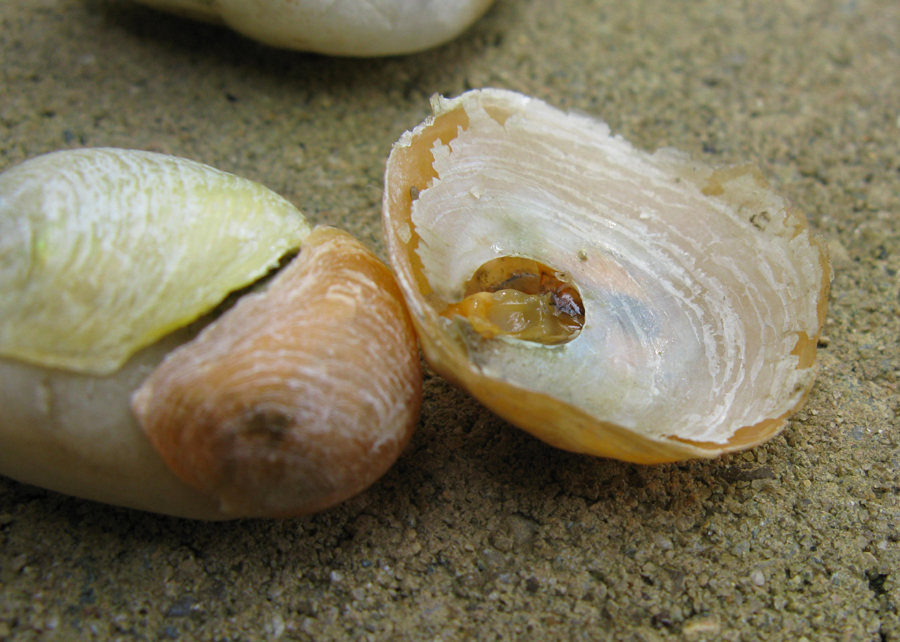
Figure 1: Yellow and orange Anomia adherent on a beach stone and Anomia with inner valve attached

Figure 1: Yellow and orange Anomia adherent on a beach stone and Anomia with inner valve attached depicting the hole for the bysuss.

This may be a large clam shell, a rock, or another hard surface such as logs, wharfs or boats. They live in shallow waters often close to the beach, in a bay or estuary. The upper valve is brightly colored, either a shiny yellow or orange. Shades of silvery grey and black are present when Anomia are submerged in the mud and silt at the sea bottom. Interestingly, the lower valve is white, light grey or colorless. Is the bright yellow or orange color perhaps dependent on light filtering through the shallow waters? Is the purpose of the color to protect against a predator such as oyster drills, starfish and crabs (which are collectively referred to as boring gastropods). This seems unlikely as predators are supposed to find their food by scent not sight, as pointed out to me by Paul Monfils.
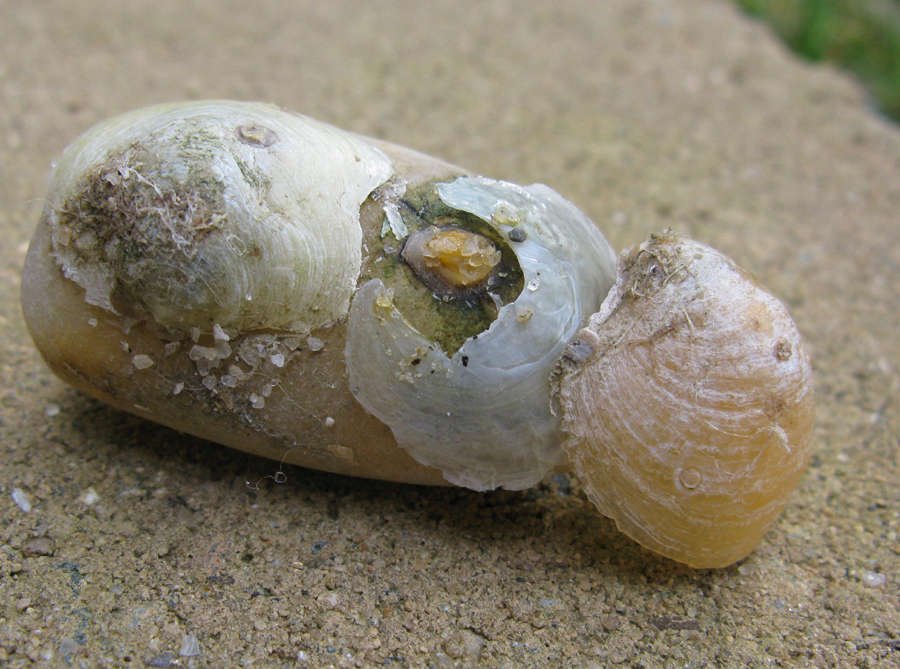
Figure 2: Two Anomia adherent on a beachstone. The orange upper valve has detached revealing the lower valve and the adherent mollusk.

Figure 2: Two Anomia adherent on a beachstone. The orange upper valve has detached revealing the lower valve and the adherent mollusk.

Anomia shells are extremely thin and paper-like such that they are often translucent, thus easy prey, one would think. Small holes are frequently found on the upper valve usually placed just where the animal is situated at the top of the shell. These small holes look like the mark of a predator, but they are by no means present on all shells that wash up on the beach. These animals must die of other causes too.

Personally I am most interested in their color. Why either yellow or orange? And how do these bright colors serve to enhance survival of this species.
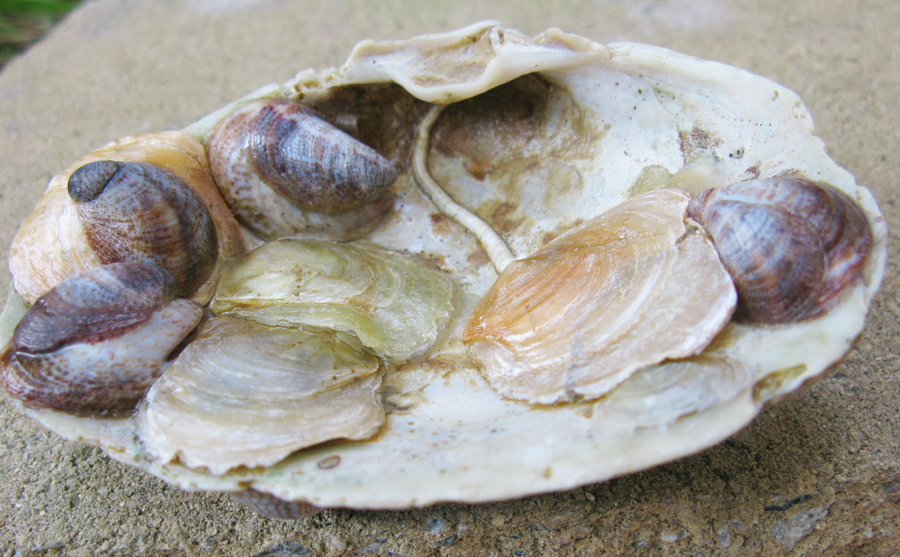
Figure 3: Bright yellow and orange Anomia simplex adhering on a beach stone.

Figure 3: Bright yellow and orange Anomia simplex adhering on a beach stone.

My own observations from our beach, situated on a natural bay of Long Island (New York State) are that greater than 99% of Anomia are either yellow or orange, the rest being either silvery, or blackened. Neither yellow or orange predominate. These numbers do not vary dramatically with the tides or with the seasons (e.g. temperature). Both yellow and orange come in all sizes varying between approx 1-4 cm in diameter. Both yellow and orange are susceptible to drill holes (see above). Yellow and orange animals cohabitate in close proximity on rocks or large clam shells. They may even adhere partially on top of each other and they share their solid surface habitat with others shells, mostly Crepidula fornicata (slipper shell), as shown in Figure 3,4. The latter are considered an invasive species and are known to damage commercial oysteries: http://www.jncc.gov.uk/page-1711

Figure 4: Several Anomia simplex (5) of different colors and slipper shells (6) all adhering to a single large clam shell.

Figure 4: Several Anomia simplex (5) of different colors and slipper shells (6) all adhering to a single large clam shell.

Anomia collected from different locations may have different colorings. Anecdotal evidence (courtesy of Steve Rosenthal) has it that Anomia collected from western beaches of Long Island are less brightly colored than those from the eastern beaches. And pictures of Anomia from Florida beaches (http://www.squidoo.com/seashell-identification) reveal many shades of silvery white and grey and black, that seem much less prevalent on our beaches. Thus location and habitat my affect coloring.

Different colors and patterns on scallops and mussel shells are genetically determined. Therefore it is likely that the yellow and orange colors of Anomia could also be genetically encoded. Since Anomia can be bred in the laboratory I would like to know whether all offspring of yellow Anomia are yellow and those of parental orange color remain orange. The enigmatic question of how the color helps this organism survive could be experimentally addressed with laboratory experiments in which selected predators are added in a controlled way.

In the meantime I will continue to walk the beaches and collect Anomia to make ear rings and other colorful jewelry (Figure 5). Out here these shells are quite familiar and are collected by many beach goers. They remind us all of hot summer days on the beaches of Long Island.
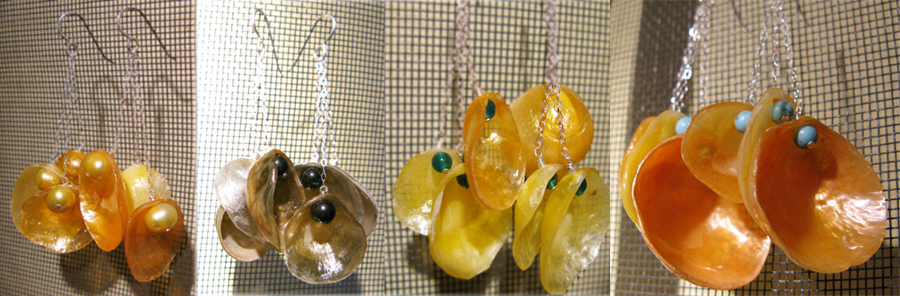
Figure 5: Jingle ear rings with yellow pearls, with hematite, with green onyx and with turquoise beads (from left to right).

Figure 5: Jingle ear rings with yellow pearls, with hematite, with green onyx and with turquoise beads (from left to right).

Triple Jingle shell ear rings with pearls

See:

http://www.etsy.com/shop/maidstonejewelry?ref=si_shop&view_type=list

http://www.maidstonejewelry.com

For more on Jingle Shells click here.

Further reading:
1) Partial Metamorphosis in Anomia simplexAuthor(s): V. L. Loosanoff. Science, New Series, Vol. 133, No. 3470 (Jun. 30, 1961), pp. 2070-2071.

2) Genetics of shell color in mytilus edulis l. and the association of growth rate with shell color. Gary F. Newkirk J. Exp. Mar. Biol. Ecol., 1980, Vol. 47. pp. 89-94.

3) Comparison of the composition of fossil and recent mollusk shells. Pilkey OH, Goodell, HG. Geological Soc of Amer Bulletin, 75:217-228, 1964.

4) A Jingle (Shell) in Your Pocket, By Patricia B. Mitchell.

http://www.mitchellspublications.com/guides/shells/articles/0001/

5) http://www.marinespecies.org/aphia.php?p=taxdetails&id=156737

6) Wikipedia http://en.wikipedia.org/wiki/Anomiidae
JEWELRY IN THE MUSEUM OF ISLAMIC ART, DOHA (Qatar)

OK! This is only in part about jewelry… I am writing from Doha in Qatar. I am here on business for my 3rd annual trip.

But this time I got to visit the newly opened Museum of Islamic Art. It is a majestic structure on the Corniche (bay) of Doha built by IM Pei, arguably the most noted present day architect of museums, having designed the East Wing of the National Gallery of Art in Washington DC, the pyramid structure of the Louvre in Paris, and the Miho Museum in Japan. Seen from certain angles the museum in Doha looks like a veiled woman. There are many breathtaking vistas of Doha from the Museum. The Museum of Islamic Art covers a lot: 7th to 19th century art and artifacts including textiles, metalwork, scientific and astronomic instruments, architectural design, carpets, paintings, lots of calligraphy, glass and ivory objects, and jewelry! The latter is why I went in the first place, of course. The museum is a “must see”.

The objects on exhibit are very carefully chosen and well displayed. Here are some of the highlights I found:

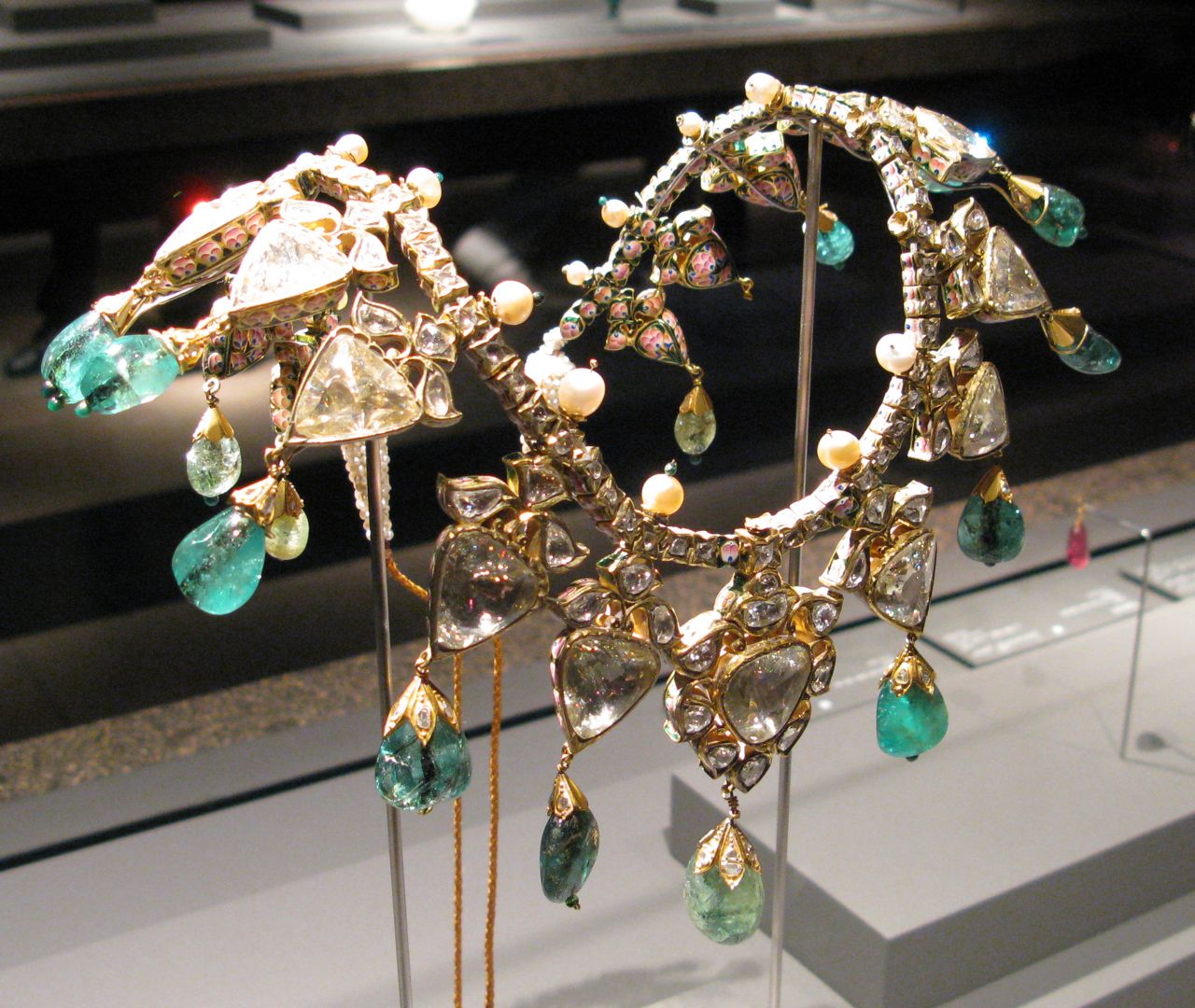
A monster necklace belonging to the Indian 17th century Mughal emperors Jahangir and Shah Jahan sporting one inch pink spinels (some of which are engraved with the emperors names), diamonds, pearls and gold.

Emeralds and huge diamonds on this necklace.

A haldili of Shah Jahan. This is a calligraphic jade pendant worn to cure the wearer of heart palpitations. The emperor wore this to help him recover from grief after the death of his beloved wife Mumtaz Mahal in 1631.

Unbelievable paired gold filigree bracelets, worn on both wrists during the Fatimid period in Egypt/Syria from the 11th century. Similar ones are depicted here.

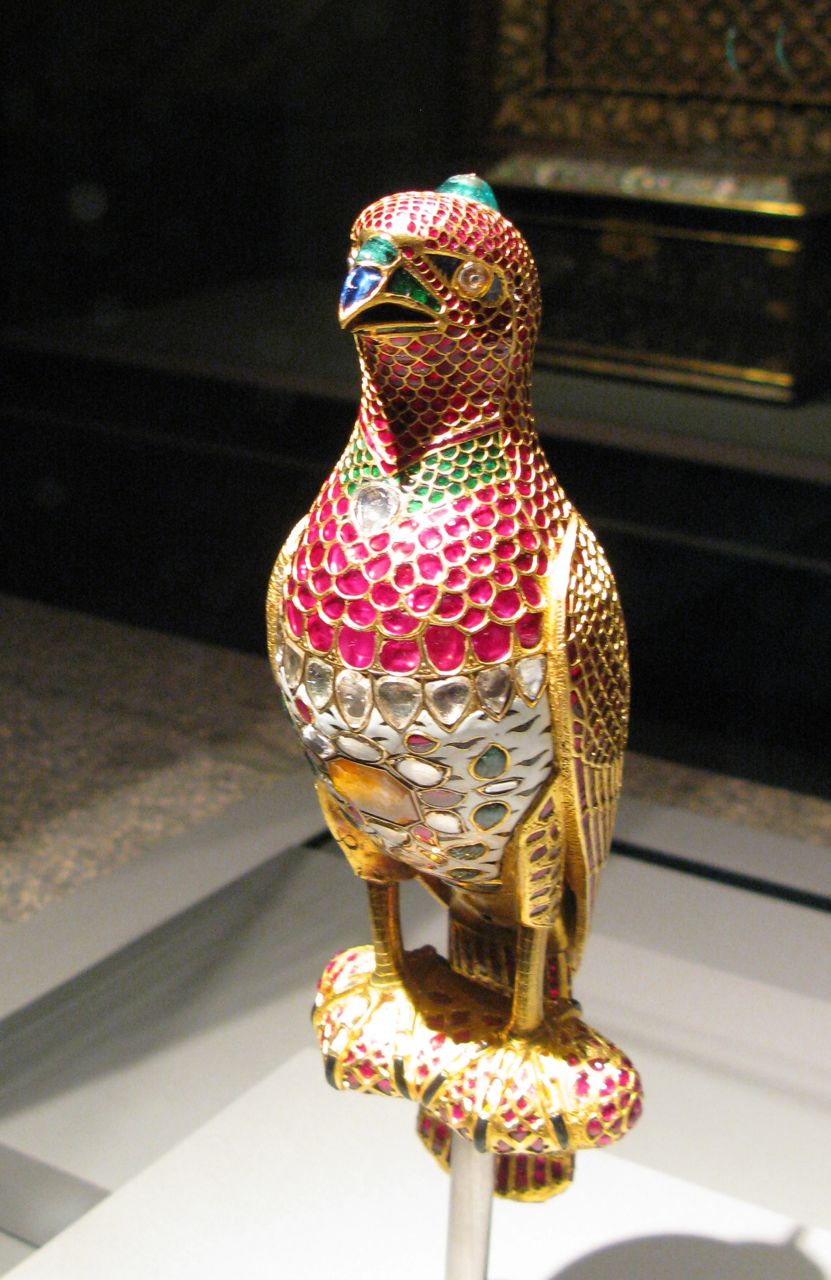
And, my favorite, the Jeweled Falcon, also from Shah Jahan, and dated 1640. This 10 inch bird is completely covered with gold, enamel, inlaid rubies, diamonds, emeralds, sapphires and onyx!

Shah Jahan’s pet Falcon

This museum is well worth a visit, even a detour, to Doha if you are in this area of the world.

On my way home, I decided to walk. It was 5:30 PM and the hotel was on the other side of the Corniche. I guessed, maybe 4 miles away and about 1 hour at a brisk pace? There was lightening in the distance and the sky looked ominous. Would I get drenched? The Corniche is bordered by park grounds, and this is where people spend their time off, along the water. It is a great walk to observe people.

Doha is such a clash of cultures, I thought. There is the traditional, the veiled women in a black abaya and/or hijab, men in white thobes with a white or red checkered ghutra covering the head, mosques everywhere in the background. And there are the young people who wear jeans and tee shirts with English words on them. One such shirt read: “Everybody wants to be just like me!” I smiled at the young man and he smiled back. One young woman was sitting on a bench, completely veiled in black abaya, but she was wearing hot pink high-healed shoes!

On the water there were young men on jets skis going at top speed perilously close to the rocky shore, or doing flips in the air and crashing in to the water to the applause from the walkway! Then there were joggers, perhaps a dozen: all men, except for one woman in a sports bra. This is just like Central Park, in New York, I thought. These joggers were likely not Qataris. I think they were what are called “guest workers” or “ex-pats”. For every Qatari, there are about 5 or 6 guest workers in this country. Many have menial jobs maintaining the hotels or building the high rises under construction everywhere. They come from the different countries lining the Indian ocean. There has been concern about how they are treated, for example in neighboring Dubai. Others are from Europe or the United States. There are major international companies with a large presence in Qatar, such as the French oil and gas company Total. I had previously met some French people working in Doha for Total.

I passed the Emirs’ palace, a government building. Then there is a 36 foot clam shell with a pearl in it, a well know landmark sculpture in town. I passed Balhambra, a local restaurant on the water, and the large statue of Orry the Oryx, a Qatari version of a Disney character it seemed to me.

I passed enormous billboards for QNB (Qatar National Bank) offering mortgage loans to young Qatari couples! Behind the billboards, one high-rise under construction after the other. I tried to remember the name of the construction companies: Al Jaber was one of them. I passed a new high rise called Al Bidda: a twisted triangular structure, not much to my liking.

Finally, I passed through a lovely large meadow with a playground, swings, sand, lots of kids chasing balls, or one another. In the shadows of the park there was even a couple being affectionate, but as I approached they shrank away from one another. Then a long row of flowering white Rhododendron plants leading up to the pyramid structure of the Sheraton hotel.

That is all for now. Take care. David

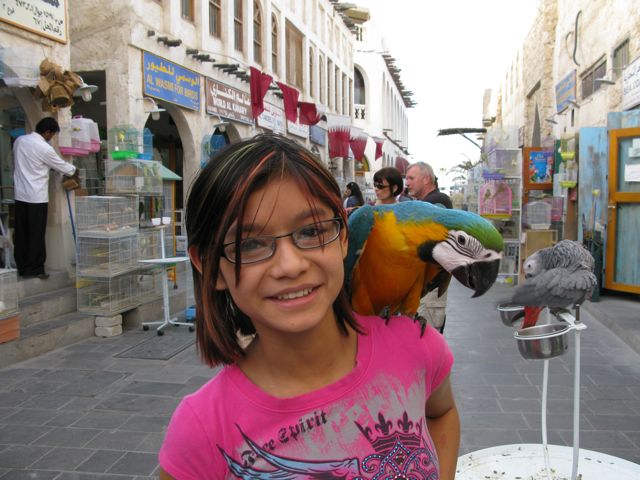
The Souk in Doha

WEDDING RINGS

I have been wondering about wedding rings. Why do we wear them? When and how did this tradition originate?

Jewelry itself is as old as mankind. Prehistoric artifacts from 82,000 years ago have shown that homo sapiens in Marocco, and perhaps homo neanderthal too, made necklaces of perforated sea shells. A nice picture is found on page 8 of “Jewelry: from antiquity to the Present” depicting a necklace of perforated clam shells and small animal bones from 38,000 BC. That is before the last ice age and that is when woolly mammoths roamed across America. Along with necklaces of teeth and bones of hunted prey, these items possibly served as powerful talismans to be worn by the hunter and not just for decorative purposes. Special protection and powers from deities were expected.

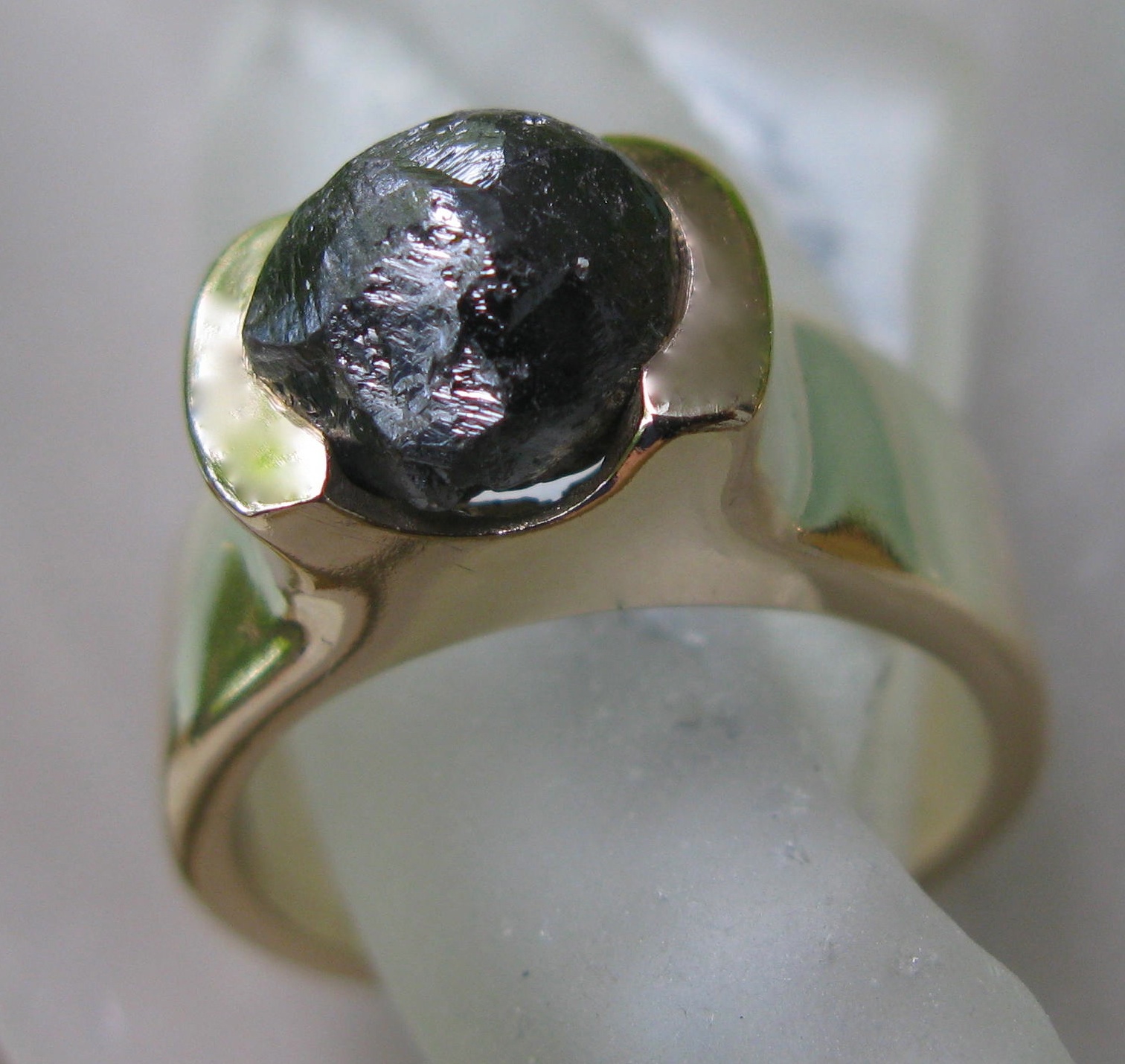
7 Karat Black Diamond in the Rough in a gold ring (engagement ring)

Common lore portends that early Egyptians first used wedding bands fashioned of reeds from the banks of the Nile perhaps around 4000 BC. They were replaced by metal rings as soon as metallurgy was discovered. Gold jewelry first appeared in Mesopotamia around 2500 BC. Many of the same jewelry techniques we use today, were already in use in antiquity including repoussee, granulation and wax techniques using gypsum molds. At the royal tombs of Ur in Mesopotamia, Queen Pu-abi, for instance, wore a ring on each finger and among her 63 attendants buried with her, the women wore intricate headbands, ear rings, necklaces, bracelets and rings and the men wore ear rings, necklaces, armlets, bracelets and pectoral ornaments. At the site of ancient Troy a treasure of jewelry was found including 8000 small rings dating 2200 BC. In Egypt scarab rings were particularly common and served as a portable seal with a hieroglyph signature. You can see many samples in the Metropolitan Museum of New York and other museums of antiquity.

In ancient Rome , marriage rings became a symbol of a contract. Iron was adopted as the metal of choice rather than copper, brass or gold. Acceptance of the rings was considered legally binding. The betrothal ring was usual, but not required and was exchanged prior to the wedding like an engagement ring. It signified eternal commitment and was worn on the left ring finger because the vein of this finger (vena amoris) was thought to lead directly to the heart. In the later stages of roman civilization excessive gold rings were sported.

It was the church that then bestowed religious significance on the wedding rings with benediction of the rings beginning in the 11th century. In Jewish texts reference to rings may be much earlier. This led to our current day religious ceremonies:
Church of England (1662 Book of Common Prayer) – “With this ring I thee wed, …
Judaism – “With this ring, you are consecrated to me according to the law of Moses and Israel.”
Roman Catholic – “… take this ring as a sign of my love and fidelity. In the name of the Father, and of the Son, and of the Holy Spirit.”
Eastern Orthodox – “The servant of God (name) is betrothed to the handmaid of God (name), in the Name of the Father, and of the Son, and of the Holy Spirit. Amen.” said three times while the Priest makes the Sign of the Cross with the ring over the bridegroom’s and then the bride’s head.

But some religions frown on wedding rings. Quakers in particular, who claim the tradition is heathen. And Muslims, who either quote the prophet: “Wearing gold is forbidden for male Muslims, but it is allowed for female Muslims” or decry this western tradition.

Never the less, present day customs across the world nearly all involve some kind of wedding rings, although there are many amusing curiosities. In some countries wedding rings are worn on the right hand rather than on the left ring finger. In the Netherlands Catholics wear it on the left and Protestants on the right! Hindus sometimes wear a toe ring called bichiya. In east Bengal a bangle is worn by married women, in stead of a ring. Traditional Russian wedding rings are three interlocking bands of rose, white and yellow gold, worn on the right hand.

Champagne Heart Diamond in a Gold Ring

Wearing a wedding ring is not only a personal symbol of enduring commitment and eternal love, but also a public symbol, advertising marital and availability status. Every culture appears to have a set of customs by which women (and men to some extent) announce their availability. We came across a quaint custom on the Caribbean island of St. Lucia, where women wear a colorful head piece, called the Tête en l’air arranged with one or more peaks which represent various levels of romantic commitment: one peak means ‘my heart is free’, two peaks means ‘my heart is engaged but you can try’, three peaks mean ‘my heart is engaged and committed’, and four peaks means ‘anyone who tries is welcome’!

In discussing modern periods, a recent textbook on the history of jewelry concludes that “the major international [jewelry] houses have continued to work…following styles evolved from previous decades, [but that] innovation has come…from individual artist craftsmen trained at art schools”.

If you are looking for wedding rings, and public symbolism is important to you, you probably want to find a conventional and traditional set of engagement and wedding rings (that everyone will recognize as such). A nice custom is to use family heirloom rings from grandparents.

If on the other hand private symbolism and personal tastes are more important to the couple, there are some interesting modern day trends. You can personalize your rings by incorporating your fingerprints on your rings, or hidden messages to each other, or get a set of rings that join like puzzle pieces, and you can check out at least 500 other imaginative ideas! Working with a custom jeweler/artist you can make tailor-made rings to suit your special needs. It does not have to be expensive. Remember, the major expense in wedding/engagement rings is the gem (diamond) accounting for approx. >70% of the final price. Check out our website for more on this!

Take care, David

4 colored rough diamonds set in a silver wedding band

4 colored rough diamonds set in a silver wedding band

CALDER Jewelry

If you love jewelry and you are in the New York City neighborhood, you have got to see the current exhibit at the Met (Metropolitan Museum): Calder Jewelry.

Wow it is truly a great exhibit…I saw it last week and read the entire book 280+ pages with great photography.

Alexander Calder is a giant in the art field for having discovered a new dimension in art: mobiles. What most people do not know is that he made jewelry throughout his life, 22 July 1898 – 11 November 1976. It was not commercial but rather intended for friends and family. It’s mostly brass, steel, and silver. Very clever pounded wire techniques. A ‘must see’ for anyone who makes jewelry themselves.

Some of my favorites:

the engagement ring for his future wife discussed in this NY Times article .

a super modern necklace that he made in 1943!

and the mobile ear rings! Imagine wearing those.

Enjoy!

take care, David